If you’re in your 40s, 50s, or 60s, you’ve probably heard someone say, “Hormone therapy causes breast cancer.” That fear didn’t come out of nowhere - it came from a single study published in 2002 called the Women’s Health Initiative (WHI). Overnight, it changed how women and even clinicians thought about menopause care.
But here’s the part most women never hear: The WHI findings were misunderstood, misreported, and later corrected.
And the corrected data tells a very different story.
How One Study Created a Nationwide Panic
When the WHI released its early results, the headlines were, let's admit, alarming. News outlets reported that hormone therapy increased breast cancer risk (I was at work this day, and we called an emergency meeting over lunch to discuss), and millions of women stopped their treatment immediately (our phones were ringing off the hook with patients asking what to do). Prescriptions dropped by more than half within months.
Women were scared. Clinicians were scared. And an entire generation (my mom being one of them) was left to suffer through menopause without the most effective treatment available.
But the early headlines left out some very important details.
What the WHI Actually Studied
The WHI wasn’t designed to study the typical woman starting hormone therapy for hot flashes, sleep issues, mood changes, or perimenopause symptoms.
Instead, the average participant was 63 years old - more than a decade past the age when most women begin hormone therapy. Many already had health conditions like high blood pressure, metabolic issues, or years of estrogen depletion.
This matters because timing is everything with hormone therapy. Starting hormones long after menopause is very different from starting them during the transition.
The WHI also used a type of hormone therapy that is rarely used today (an oral, combintaion pill that has synthetic estrogen and progestin).
The Most Important Part: The Breast Cancer Finding Was Misinterpreted (gasp).
Here’s what the WHI actually found:
-
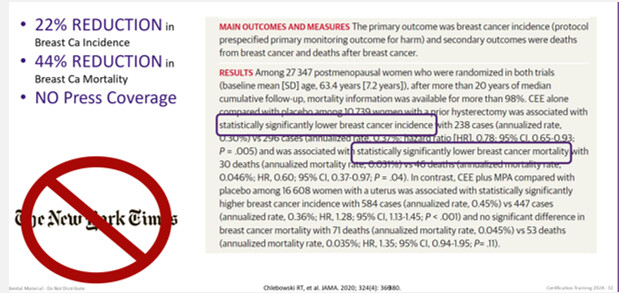
The estrogen‑only group (women who had a hysterectomy) had a lower risk of breast cancer. Yes, you read that correctly. They had a 22% reduction in breast cancer incidence, and a 44% reduction in breast cancer mortality!
-
The small increase in breast cancer was seen only in the combined estrogen + synthetic progestin group. Not in the women just on estrogen.
-
Even in that group, the increase was very small - and the statistical significance is arguable.
-
Later follow‑up studies showed that the early interpretation was overstated.
But none of that made the headlines. Nope, none of it.
Instead, the message that stuck was: “Hormones cause breast cancer.”
And that message has been hurting women ever since.
What We Know Now
After years of re‑analysis, updated research, and better-designed studies, the picture is much clearer:
-
Hormone therapy is safe and effective for most healthy women, ideally under age 60 or within 10 years of menopause - but even beyond these years can be ok for the right patient and the right symptoms.
-
Estrogen‑only therapy is associated with a reduced risk of breast cancer. To reiterate - a 22% reduction in risk.
-
Modern hormone therapy uses different formulations and delivery methods than the WHI.
-
Starting hormone therapy earlier - not decades after menopause - is the most effective.
Today, major medical organizations agree that hormone therapy is the gold standard for treating menopause symptoms.
Why This Matters for You
Many women still avoid hormone therapy because of outdated fears. They struggle with:
-
Hot flashes
-
Night sweats
-
Sleep problems
-
Weight changes
-
Mood shifts
-
Brain fog
-
Low libido
-
Fatigue
All because of a misunderstanding from 20+ years ago.
You deserve better information - and options that actually help you feel like yourself again.
The Bottom Line
The WHI didn’t prove that hormone therapy causes breast cancer. It proved that context matters - age, timing, type of hormone, and individual health all play a role.
Modern hormone therapy is safer, more personalized, and better understood than ever before. And for many women, it can be life‑changing. That's why we love what we do.
If you’re curious about whether hormone therapy is right for you, talk with a qualified clinician who understands the updated research and can help you make an informed, confident decision.
In support of your hormone health and following the evidence,
Andrea XO


Andrea Koch, CNP, WHNP-BC, IFMCP
Contact Me